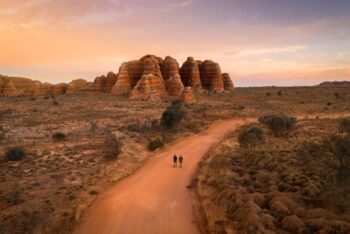
Uluṟu has a habit of sitting on the list. The plan is always to get there eventually – a milestone birthday, retirement, some future trip with more time. Australia’s Red Centre is two hours from Sydney or Melbourne, and right now it has more going on than it ever has. I went for the tenth anniversary of Field of Light, and came back with the strong suspicion that most Australians are waiting too long.
Field of Light is staying – and it’s better than it’s ever been
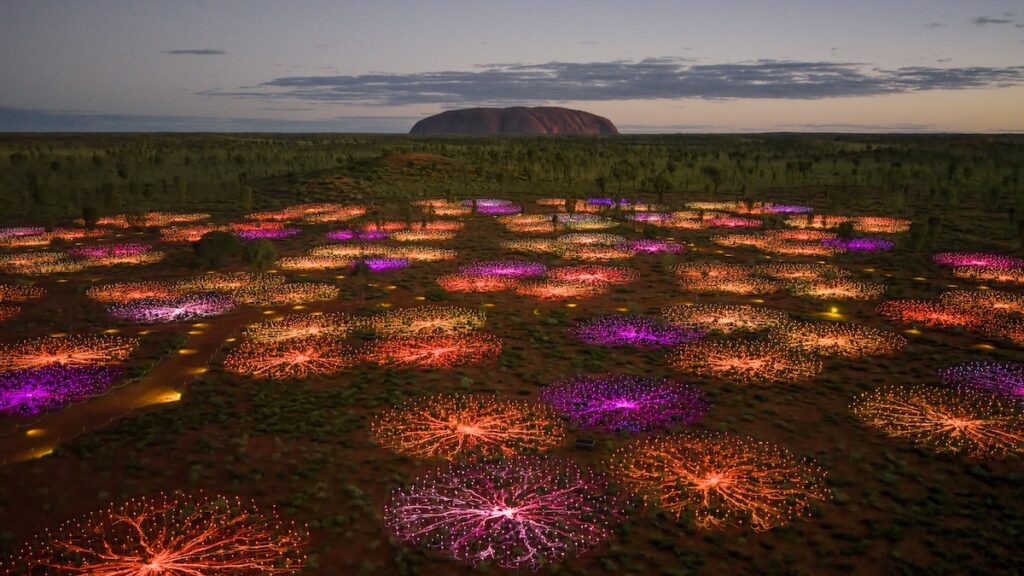
Bruce Munro first visited the Northern Territory in 1992. He spent the next 24 years working out how to respond to it. Field of Light opened at Uluṟu in April 2016 as a one-year show – it has now welcomed more than 750,000 visitors to Aṉangu Country, and Voyages confirmed during its tenth anniversary celebrations that it will remain until at least the end of 2029.
The installation is 50,000 solar-powered spindles spread across an area the size of seven football fields. The colours are deliberate – dusty terracotta, pale lilac, the quiet green of desert growth after rain – chosen to sit inside the landscape rather than compete with it. It was refreshed in 2024 with upgraded lights and infrastructure. It remains the original and longest-running of Munro’s field installations worldwide, and at ground level after dark it is not a small experience.
The anniversary was marked with a gala dinner previewing the newly launched Field of Light Dinner menu, developed with First Nations–owned producers Creative Native Foods. Coastal rosemary lamb cutlets, smoked kangaroo blini, barramundi with a Geraldton wax coconut crust, wattleseed falafel – and, before dessert, a telescope trained on Jupiter, sitting some 708 million kilometres away in the desert sky. In a city there would be too much light to find it. Out here, it was easy.
The group presentation that followed put the night into perspective. The light reaching us from nearby stars left four years ago. The Southern Cross – fixed in the Australian imagination, stitched into the flag – never appears in exactly the same position twice. There was something fitting about absorbing all of this here, in a landscape 500 million years old, on Aṉangu Country where the sky has been read and understood for at least 60,000 years. The sense of scale is remarkable.
Australian artist Budjerah performed during the evening.
Uluṟu changes every time you face it
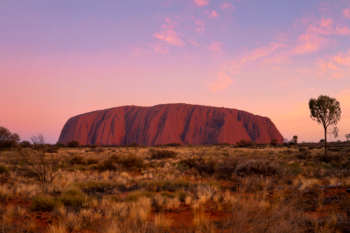
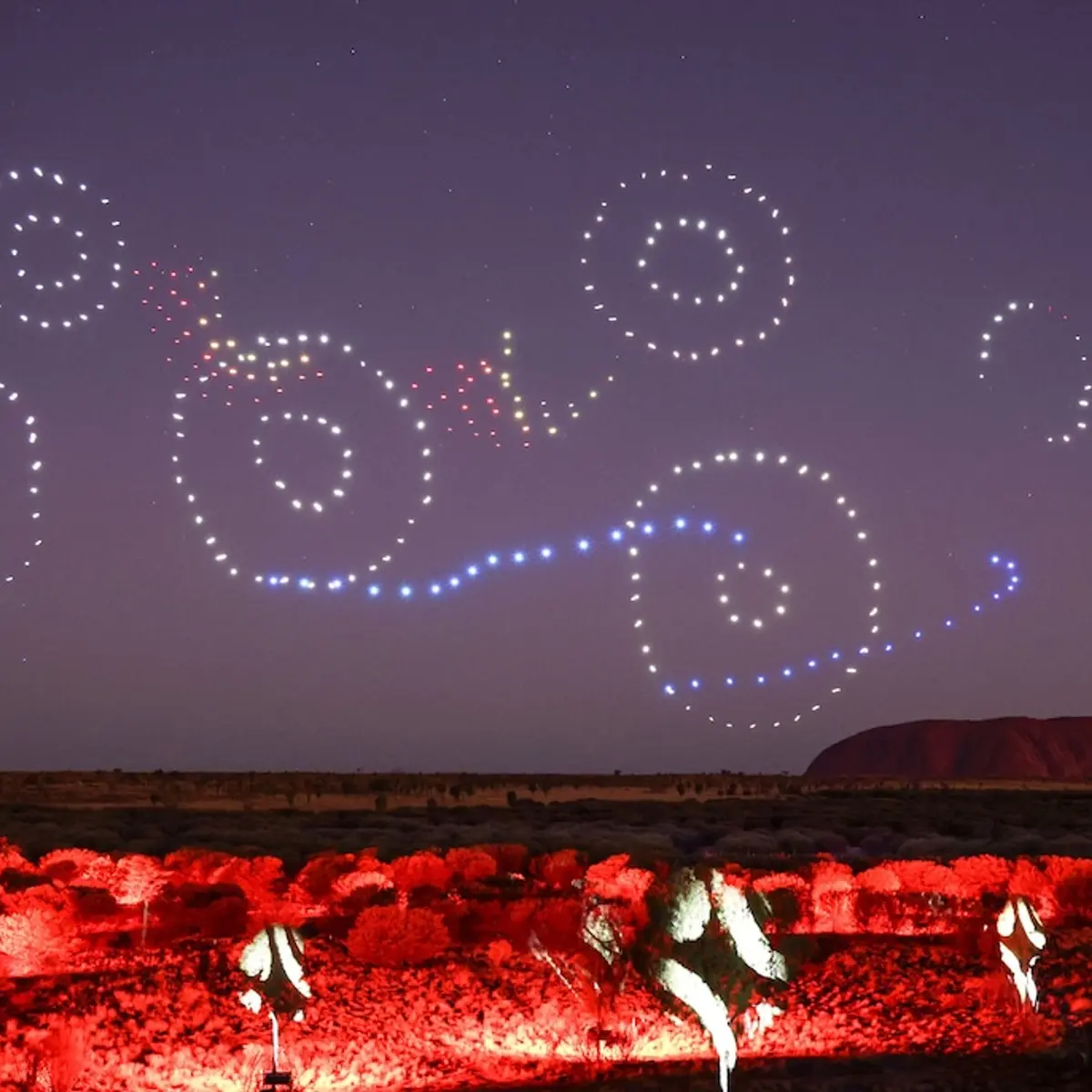
From the open-air theatre at Wintjiri Wiṟu – perched on a dune top with sightlines across to Kata Tjuta – I watched it turn deep copper at sunset and disappear into silhouette as the drones took flight. On the Mala walk the following morning, moving along the base in early light and learning about Tjukurpa, the creation stories that connect the Aṉangu people to Country, the scale was different again. I was next to it rather than looking at it. The rock face is striated and scarred in ways that photographs consistently flatten.
Then on the flight home, banking over the Red Centre, it appeared below – smaller from altitude, a dark shape in an ocean of red, but unmistakably itself.
Geologists date the monolith at between 500 and 700 million years old. The Aṉangu have lived alongside it for at least 60,000 years. The Mala walk gives both of those numbers some weight.
Wintjiri Wiṟu is worth building your trip around…
Wintjiri Wiṟu – “beautiful view out to the horizon” in Pitjantjatjara – runs twice nightly from a sustainably built open-air theatre on a desert dune, sightlines open to both Uluṟu and Kata Tjuta. The show uses 1,200 choreographed drones alongside lasers and projections to tell a chapter of the ancient Mala story, narrated in Pitjantjatjara and Yankunytjatjara languages and set to traditional inma recorded with the Aṉangu community. It’s the world’s largest permanent drone show, developed over three years with senior Aṉangu from Kaltukatjara and Mutitjulu.
I went for the Sunset Dinner – three hours, beginning with cocktails made with native ingredients as the rock changes colour in the last of the light, and canapés that set the tone immediately: cucumber topped with zesty green ants, a crocodile pie that was better than it had any right to be. The dinner box that followed contained salads, thin-sliced kangaroo and emu, and a small baguette I was tempted to pocket for later. Plus, a separate dessert box – coconut cookies, more green ants, and a dense brownie with a crumb that clung to my fingers.
There’s also a 90-minute Twilight experience with Penfold wines, cheese and dessert, and an After Dark session for those who want a second look.
Wintjiri Wiṟu held the title of Oceania’s Leading Tourist Attraction at the World Travel Awards two years running. Attraction is an undersell. This is a cultural experience the Aṉangu created to share a story passed down across thousands of generations. Sitting in that theatre, you feel its importance.
… and Sunrise Journeys is the reason to set the alarm
The third experience in the resort’s cultural programme runs at the other end of the day. Sunrise Journeys is a two-hour dawn experience built around a bespoke painting – Ngura Nganampa Wiṟu Mulapa, or “Our Country is truly beautiful” in Pitjantjatjara – co-created by three Aṉangu women artists: Selina Kulitja (Maruku Arts), Denise Brady (Kaltukatjara Art) and Valerie Brumby (Walkatjara Art). The original work hangs at the Gallery of Central Australia, a short walk from the resort. Out on the floating platform before dawn, it’s recreated across fields of desert using lasers and projection technology –iconography pulsing and shifting across the dark earth, set to a soundtrack by Aṉangu musician Jeremy Whiskey and narrated by the artists themselves.
Then the sun rises, Uluṟu catches the first light. Breakfast of native flavours and chai tea is included. Time your Sunrise Journeys for departure day – a reason to set the alarm even on your last morning.
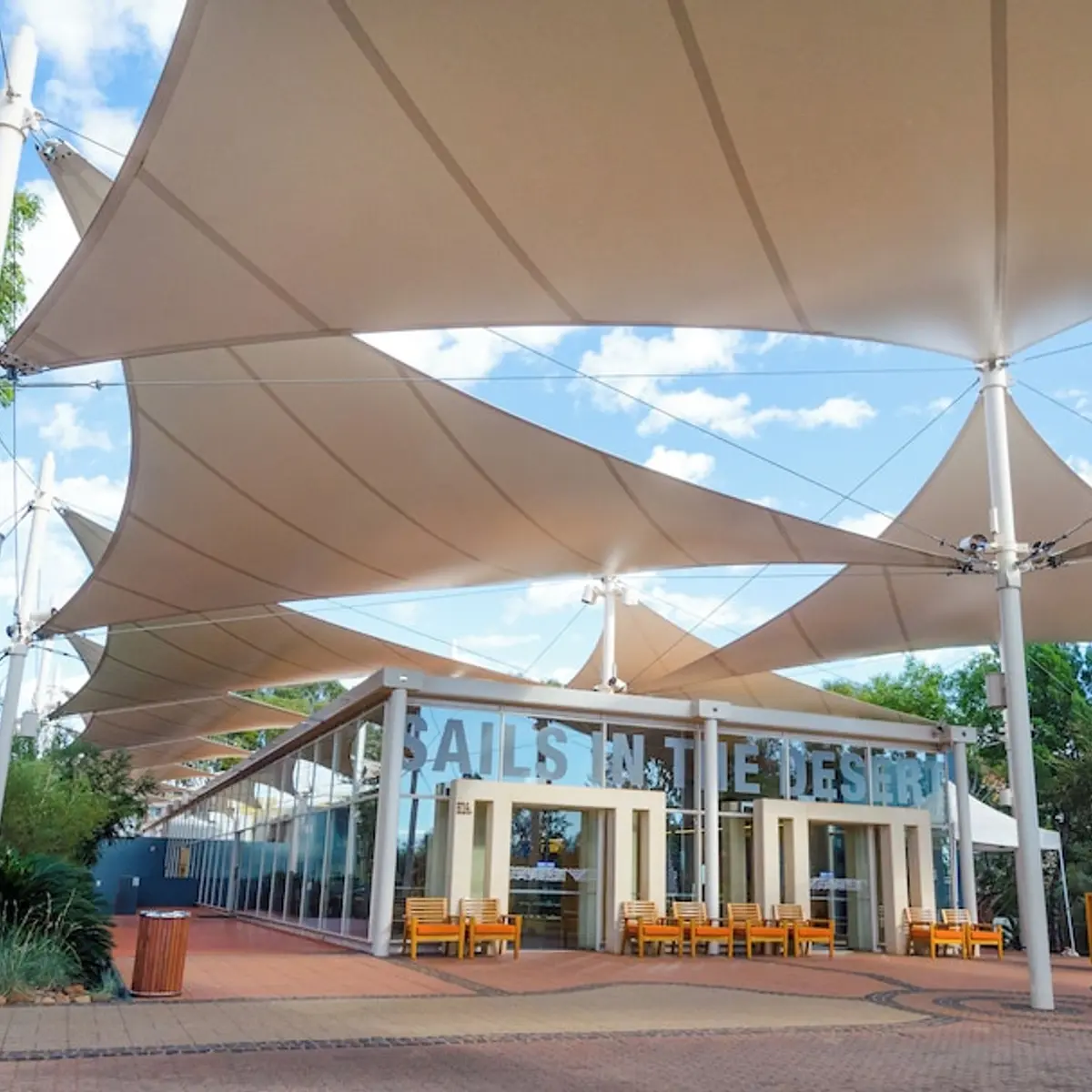
Stay at Sails in the Desert
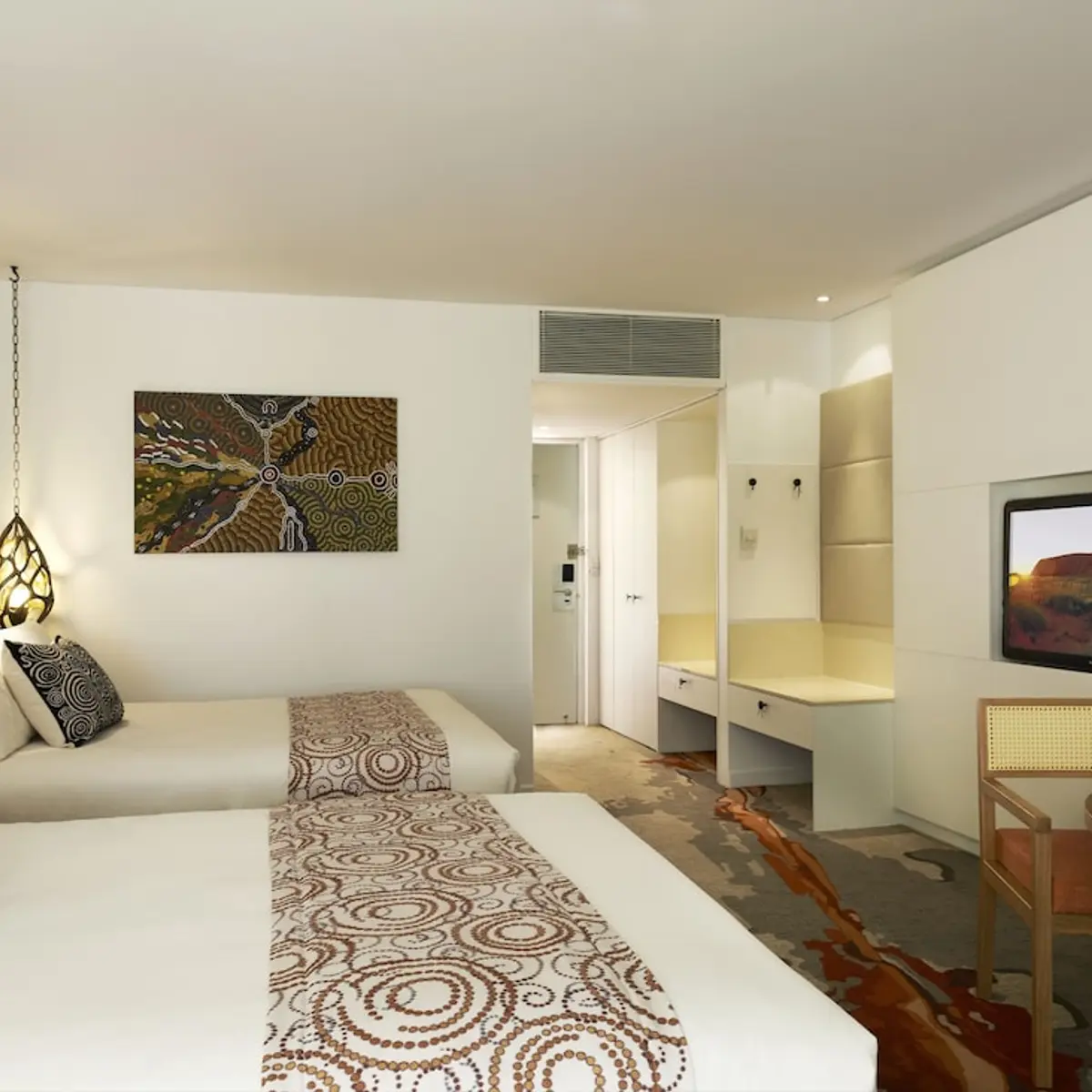
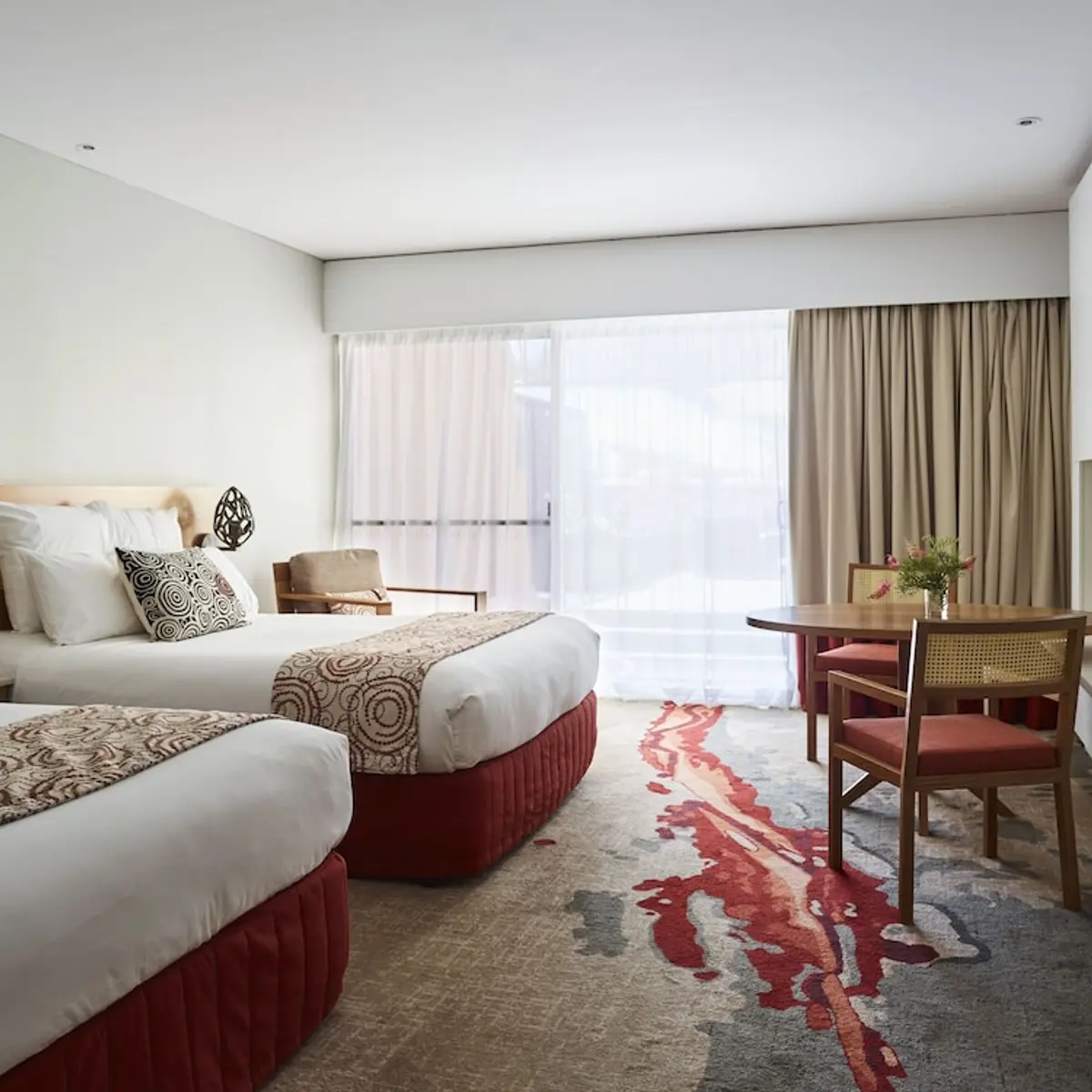
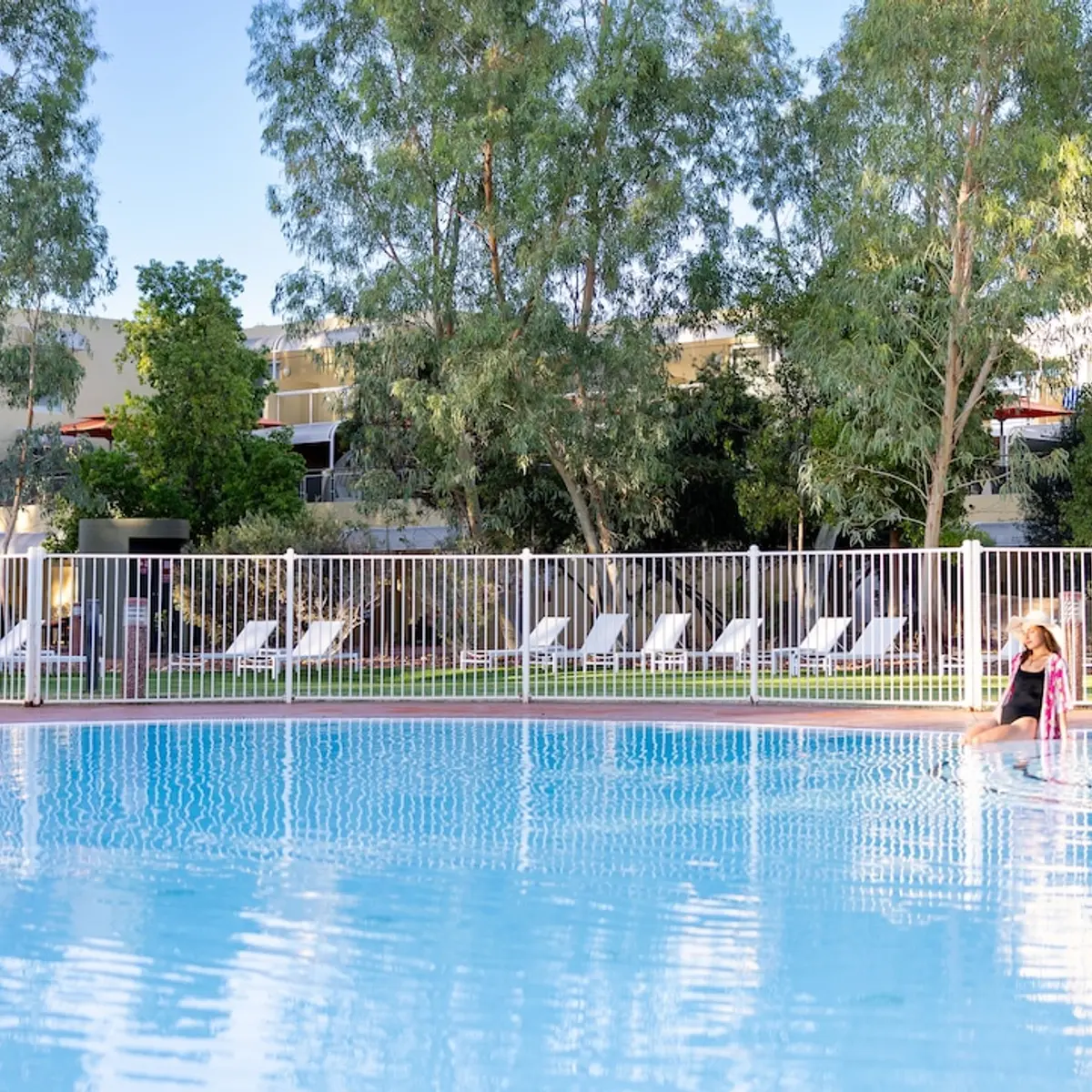
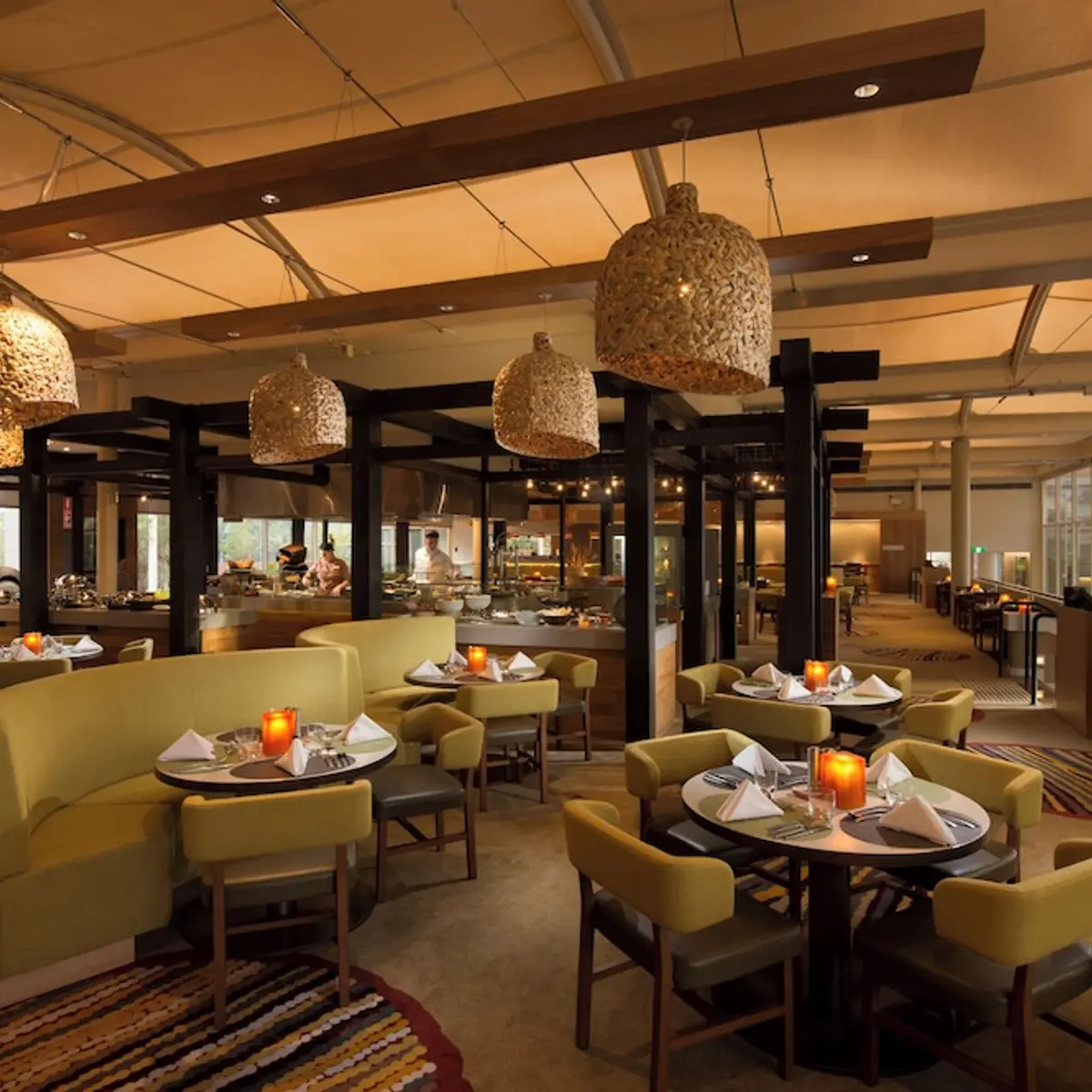
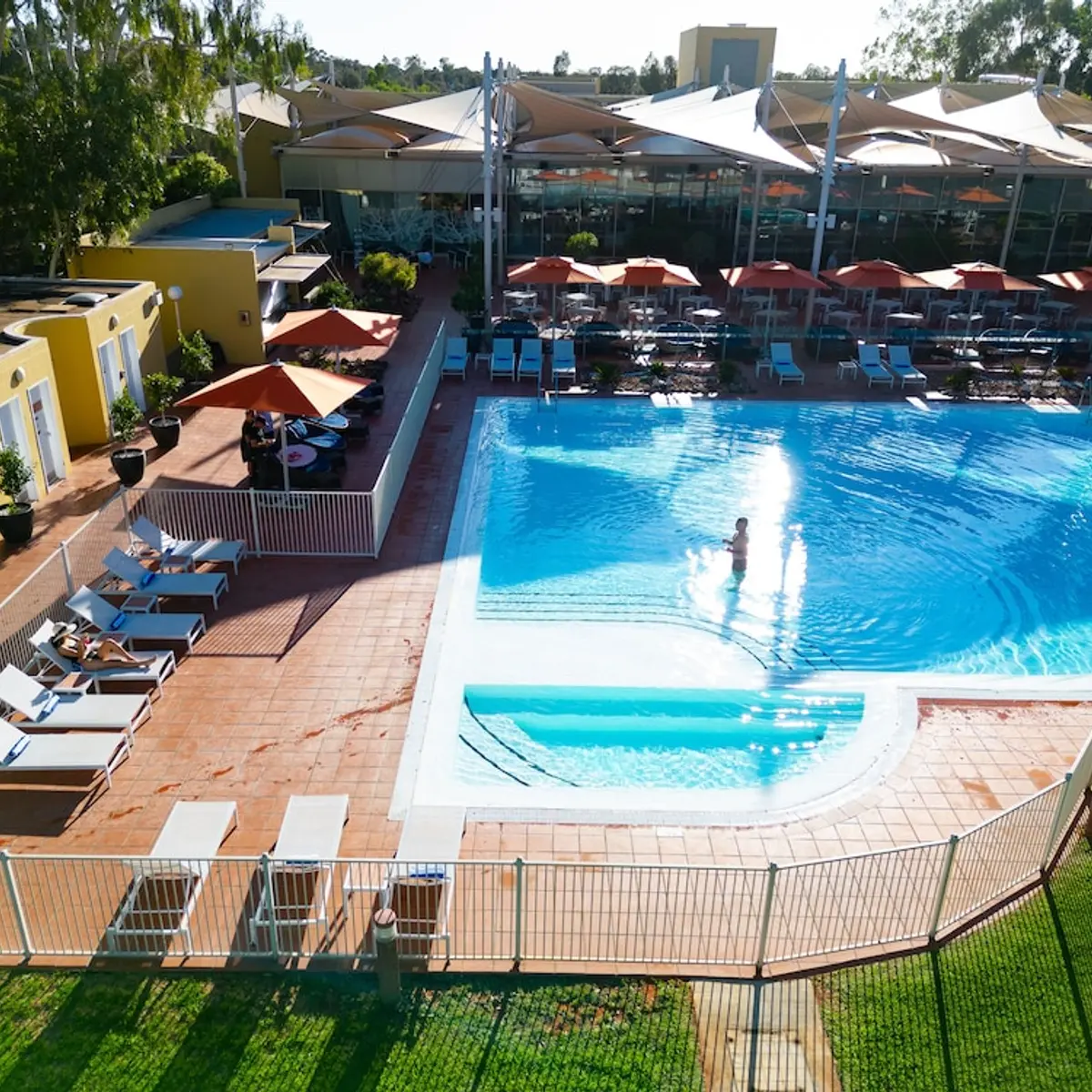
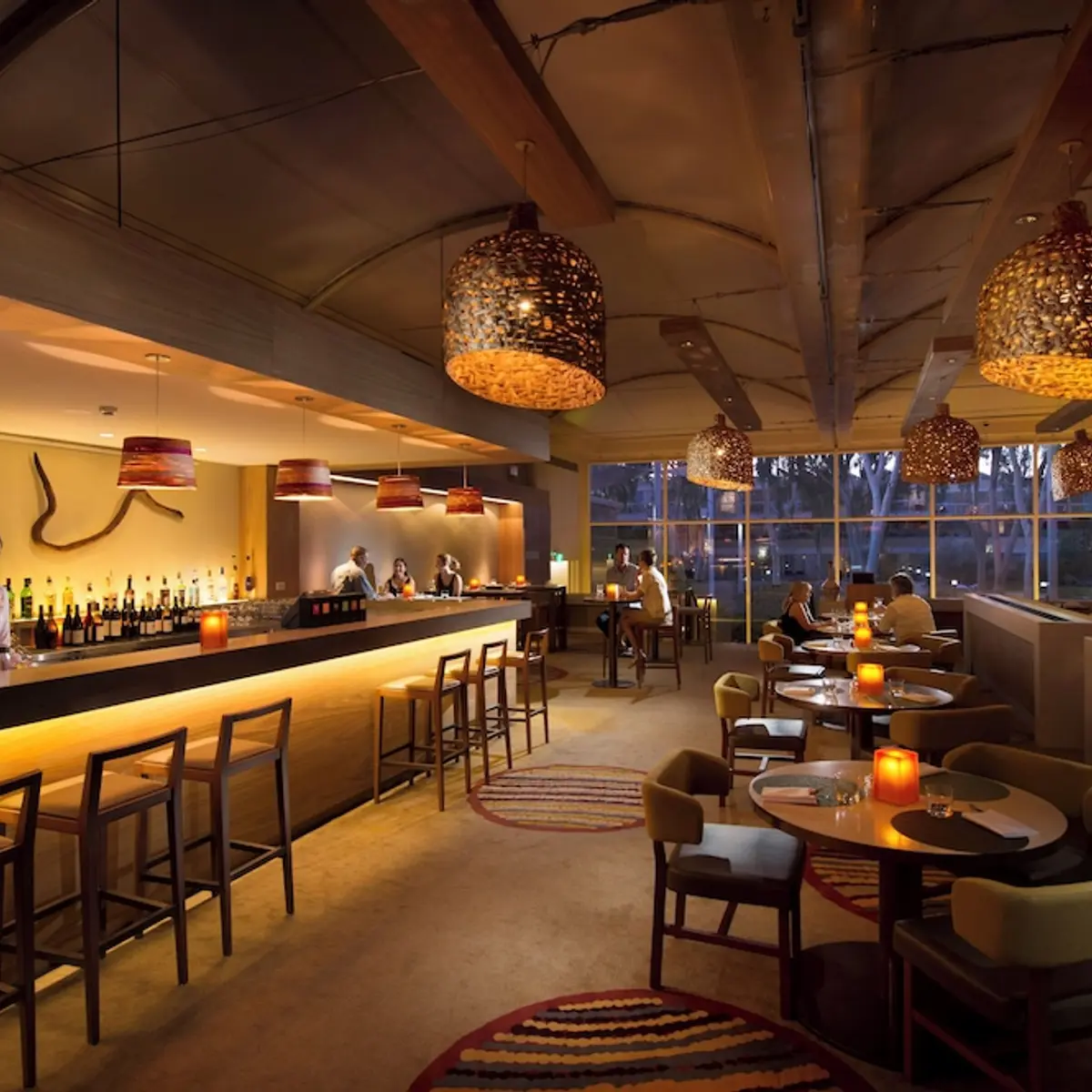
Sails in the Desert is the five-star property at Ayers Rock Resort – 228 rooms and suites beneath the white sail canopies that give the hotel its name. Indigenous design detailing runs throughout the rooms, and the Mulgara Gallery is a serious First Nations art space rather than a lobby afterthought. The Red Ochre Spa, a gumtree-lined pool and Ilkari Restaurant – named for the Pitjantjatjara word for sky, with brasserie-style dining built around native ingredients – keep you comfortable without distracting from why you’re there.
The resort shuttle connects accommodation to all experiences. You don’t need a hire car. Complimentary transfers meet every scheduled flight at Ayers Rock Airport, which is less than 15 minutes away. In 2024, the resort became the first business globally to hold both Advanced Ecotourism and Respecting Our Culture certifications.
Feature image credit: Bill Blair. Supplied.