Des contes d’or et de richesses, des histoires de seigneurs de guerre et de chamanes, ainsi que des arrêts en ville fascinants et décalés sont tous tissés à travers un voyage en train privé de luxe le long de la Route de la Soie. Suivez Belinda Jackson alors qu’elle se dirige vers la beauté inexploitée de l’Asie Centrale.
Il est 4h30 et ma peau est orange brûlée alors que je fais face à la Porte de l’Enfer. De loin, le plus bizarre – et donc le plus populaire – des charmes du Turkménistan est son cratère de gaz de Darvaza, un puits de gaz naturel qui a été allumé en 1971 dans une tentative de brûler « un peu de gaz excédentaire ». Il brûle toujours, ici dans le sévère désert de Karakoum, inextingué depuis 53 ans.
Tels des papillons attirés par les flammes, un petit groupe de nous est attiré par le foyer de 70 mètres de large pour observer les flammes rugir et vaciller ; une barrière mince ne fait rien pour empêcher les imprudents de se tenir au bord. Alors que l’aube se lève, nous retournons sur les rails et là attend le Golden Eagle. Dans le premier éclat de l’aube, notre train privé de 12 wagons reprend son voyage en suivant juste un fil de la Route de la Soie, un réseau de routes commerciales anciennes qui envoyait de la soie vers l’Ouest et de l’or vers l’Est.

Des esclaves, du papier, de la poudre à canon et des aliments ont également emprunté cette route ; des mots, des croyances, des idées et la peste, leurs compagnons de voyage intangibles à travers plus de 15 siècles. Ici, dans les déserts du Turkménistan, c’est mon avant-dernier jour de cette visite en train privé à travers l’Asie Centrale – il y a sept jours, nous étions partis de l’ancienne capitale du Kazakhstan, Almaty, voyageant à travers l’Ouzbékistan et maintenant vers le Turkménistan, de plus en plus curieux.
De jour, je me trouve rarement dans ma cabine de classe argent – il y a toujours quelque chose de merveilleux à explorer et des locaux pour me guider. Mais quand je fais une pause, c’est un espace calme, tapissé de bois, avec une table recouverte de napperons, un siège de fenêtre rembourré de bleu, des rideaux dorés encadrant des scènes de fermes sur une steppe couleur beurre, une forteresse imposante, une plaine désertique.
Chaque nuit, ma cabine se transforme ; le lit double est déplié, sa légère couette et ses oreillers sont gonflés, un itinéraire des aventures du lendemain glissé sous la porte avec des prévisions météorologiques, une note sur les devises, les restaurants que nous visiterons. Je sais quand Ekatarina a été ici, ma préposée russe laisse toujours une fleur fraîche dans un petit vase.
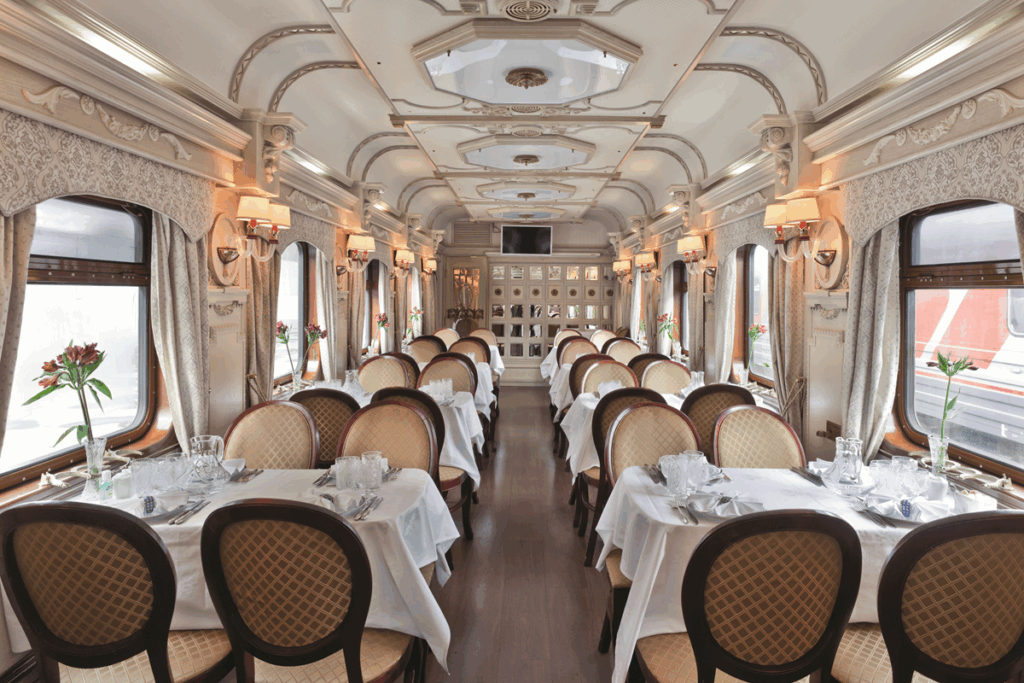
À pleine capacité, le train a 19 wagons transportant 85 personnes, mais le nôtre est un groupe beaucoup plus petit, et nous partageons nos histoires autour de G&Ts avant le dîner dans le wagon-bar, planifions des incursions shopping dans des marchés anciens, absorbons l’histoire dans la petite bibliothèque remplie de titres et d’histoires de trains avant les explorations du lendemain.


À Samarkand, le bijou de l’Ouzbékistan, je trouve le romantisme au carrefour du monde médiéval, sur la place Registan. Ici, une magnifique mosquée a été construite au 14ème siècle par le seigneur de guerre mongol Timur, ou Tamurlaine, pour sa femme Bibi-Khanym, qui aimait clairement les carreaux turquoise autant que moi. Depuis le 6ème siècle, c’est un site de rencontres et de bazars, d’ateliers et d’exécutions, l’empreinte de l’Empire mongol sur son beau visage. Maintenant, c’est la vitrine du tourisme Route de la Soie.
Le nombre de touristes locaux dépasse celui d’entre nous venant de l’étranger, mais tout le monde veut le selfie, et donc les téléphones sont passés autour alors que les femmes ouzbèkes en foulards et longues robes colorées et nous, les touristes en jeans, cimentons nos nouvelles amitiés avec des photos de groupe, à jamais gravées dans les souvenirs des téléphones de chacun. Tous sont bien contents.
Irrespectueusement adossé aux murs extérieurs de la mosquée se trouve le marché animé de Siyob, où je prends un énorme pain célèbre de la ville. Dense, moelleux et légèrement sucré, le pain est cuit dans un four tandir, et peut apparemment durer trois ans – après quoi il pourrait être utilisé comme un instrument contondant.
À Boukhara, ses murs de forteresse du 5ème siècle servent de toile de fond à une troupe de danseuses en blanc, alors qu’elles enregistrent une vidéo sur de la musique ouzbèke traditionnelle. Plus tard, j’aperçois un chameau de Bactriane à deux bosses, hirsute, se tenant innocemment à côté des murs pittoresques de l’Ark de Boukhara, ses gardiens apparaissant rapidement à la vue d’un touriste armé d’un appareil photo.
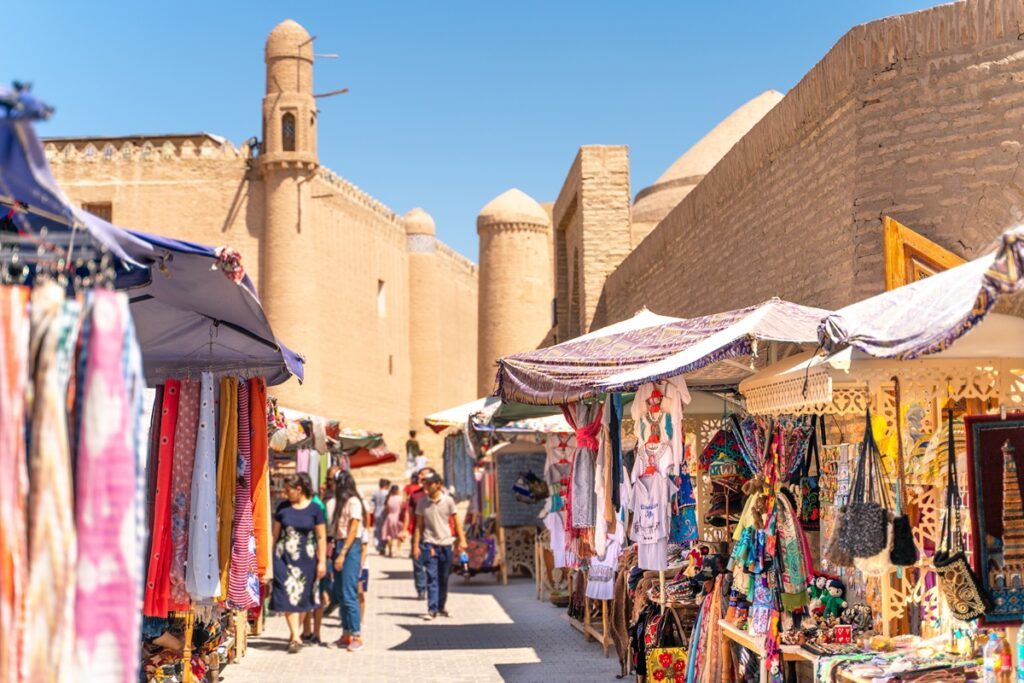
En revanche, les délicieusement décrépits murs en adobe de Khiva sont juste l’endroit pour accrocher vos tapis vifs, espérant une vente. Rouge sang ou fuchsia vif, bleu ciel et vert de l’herbe printanière, tous sont façonnés en fleurs et en volutes qui sont également brodées sur la veste courte que j’achète, empreinte de la chaleur et de la poussière de la position de Khiva entre deux déserts, le Karakoum et le Kyzylkum.
C’est ma ville préférée de la Route de la Soie – à Khiva, on m’a dit que la laine la plus douce provient du cou du chameau. Je vais prendre deux écharpes, s’il vous plaît et oui, le vendeur a raison. Dans sa ville fortifiée, Ichan Kala, le mystère est un café en plein air, où de longs lits de jour garnis de coussins invitent, un refuge orné contre le soleil brûlant du désert où je sirote du jus de grenade froid.
En quittant l’Ouzbékistan, je regarde des familles entières cueillir du coton en fin d’après-midi, des pères tenant leurs bébés pour les faire regarder notre train bleu élégant passer, le long klaxon du conducteur résonnant dans l’air chaud et calme. Les champs de coton s’estompent alors que nous entrons dans le désert de Karakoum, qui recouvre plus des deux tiers du Turkménistan. Des chameaux se promènent à travers un désert jonché de touffes d’herbe déshydratée et de buissons rampants – les montagnes enneigées et les pommiers chargés d’Almaty semblent à des années-lumière.
Le Turkménistan est à la hauteur de sa réputation en tant qu’un des pays les plus difficiles à entrer au monde. Une horde de fonctionnaires des douanes rigoureusement uniformés monte à bord du train avec une énorme machine métallique. Pendant les quatre prochaines heures, elle va bourdonner et tamponner nos passeports dans un merveilleux affichage de bureaucratie archaïque.
Mon dernier arrêt sur le Golden Eagle est également le plus étrange d’une visite éclair des étrangetés – même surpassant le spectacle de fauconnerie à Almaty, où un aigle doré chassant les loups plonge si bas au-dessus de nos têtes qu’il crée la séparation parfaite.
À cinquante kilomètres de la frontière iranienne se trouve la capitale du Turkménistan, Achgabat, alias le « Las Vegas du Karakoum ». En quatre heures de conduite dans ses larges rues à huit voies, je ne vois que deux personnes, toutes deux jardiniers s’occupant des pelouses et des arbres impeccables. En nous voyant, ils se fondent rapidement dans la verdure, cherchant clairement à nous éviter. De même, les autoroutes à huit voies sont dépourvues de voitures.
Conseil de préparation : apportez vos plus grandes lunettes de soleil – le soleil chaud d’Asie Centrale est difficile pour cette ville désertique de marbre blanc. L’histoire raconte qu’Achgabat ressemblerait à n’importe quelle autre ville soviétique en béton sauf que son premier président, Saparmurat Niyazov, alias Turkmenbashi « le père des Turkmènes », a revêtu tous ses bâtiments de marbre blanc, simplement parce qu’il le pouvait.
Il est donc ironique que les histoires du Turkménistan soient racontées dans ses tapis aux couleurs de bijoux, empilés à vendre dans un magasin oublié même par son propriétaire. Libérée du discours du vendeur, je fais glisser mes mains sur les motifs, qui racontent les histoires de tribus et d’amulettes, de spiritualité et d’identité.
C’est un voyage spécial ; le fondateur entrepreneurial des Golden Eagle Luxury Trains, Tim Littler, est à bord et l’équipage, dont beaucoup ont rejoint le personnel lorsque la société a commencé à faire rouler les rails il y a une décennie, rayonne. Alors, est-il un passionné de trains fou ? Je demande pendant le dîner dans le train. Tim hésite avant de répondre.
« Non, mais j’ai organisé la société des trains dans mon école publique à l’âge de 12 ans, » dit-il. « Je devais être très précoce. »
Tim a d’abord rejoint l’entreprise familiale de négoce de vin, ce qui explique les listes de vins réfléchies et exploratoires proposées, mais avec son co-fondateur, la défunte Marina Linke, il a passé des décennies à fouiller les cimetières de trains de l’ancienne empire soviétique, sauvant et réhabilitant des locomotives diesel et à vapeur pour créer son propre matériel roulant. Il nous emmène dans un cimetière à Almaty, ses mains douces sur les grandes locomotives noires, et la sympathie pour leur négligence monte en moi.
La société a commencé à organiser des visites ferroviaires à travers l’Europe de l’Est et la Russie, faisant rouler le premier train à vapeur privé de luxe le long de la ligne Transsibérienne en 1996. Elle se concentre désormais sur ses voyages en Europe, en Inde et en Asie Centrale.
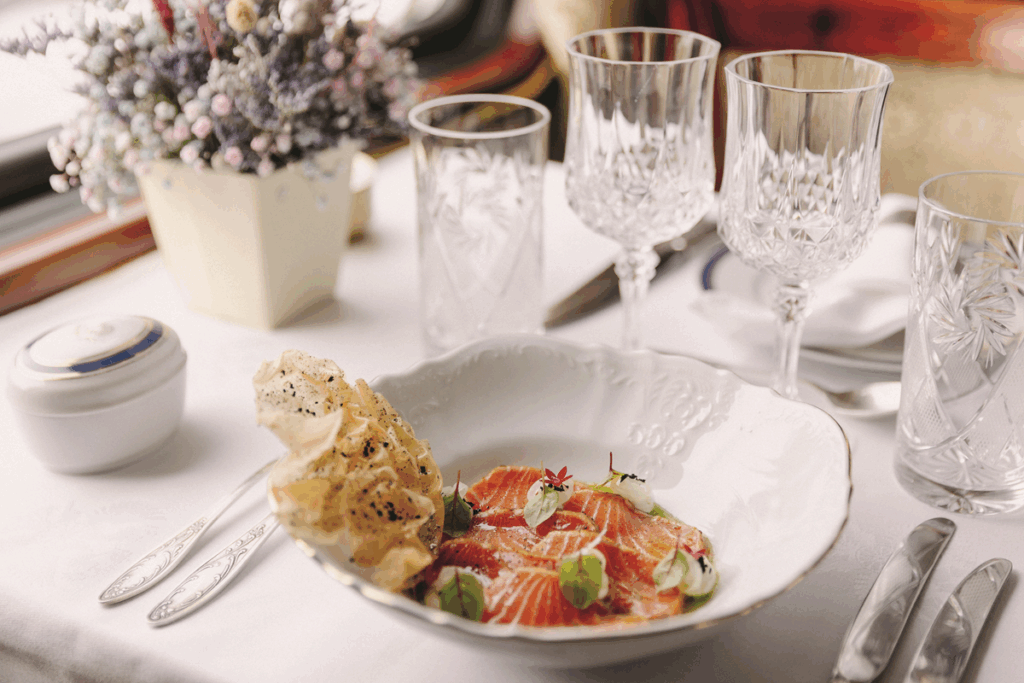
Si vous avez déjà voyagé dans des trains russes, vous reconnaîtriez la structure : chaque wagon a deux préposés, qui rangent nos cabines chaque matin, servent les repas et, en cas de besoin, m’apportent du thé, servi dans de jolis pots en porcelaine portant le logo doré de l’aigle à deux têtes de la société.
Cette attention au détail se poursuit tout au long ; chaque matin, nous prenons notre petit-déjeuner dans le train, regardant les villages et les vergers défiler alors que des fruits, des œufs, un choix de caviar et de charcuterie sont servis ; et chaque matin, une offre telle que le kasha, un pudding de sarrasin russe teinté de violet par l’ajout de petites myrtilles, ou des crêpes farcies de tvorog sucré, un fromage frais de fermier que l’on trouve dans tous les bons petits-déjeuners en Asie Centrale.
Dans les villes, je consolide ma passion pour le plat national ouzbek, le plov, un régal de riz et d’agneau. Je me réjouis de ses juteux raviolis appelés manti et apprécie la maîtrise du bon shashlik – quel pays n’a pas sa variation de viande sur bâton ?
Un soir, un dîner barbecue est servi sur la plateforme de l’ancienne gare de Boukhara ; les chefs semblent apprécier l’occasion de faire griller à l’air libre, au lieu de réaliser des miracles culinaires dans les petites cuisines à bord. Mais la soirée dont tout le monde parle est le fameux dîner caviar du train – le caviar Beluga et Osetra de la mer Caspienne est servi dans d’énormes soupières en argent, suivi de blinis et de crème aigre, puis de bouteilles de champagne J. Lassalle.
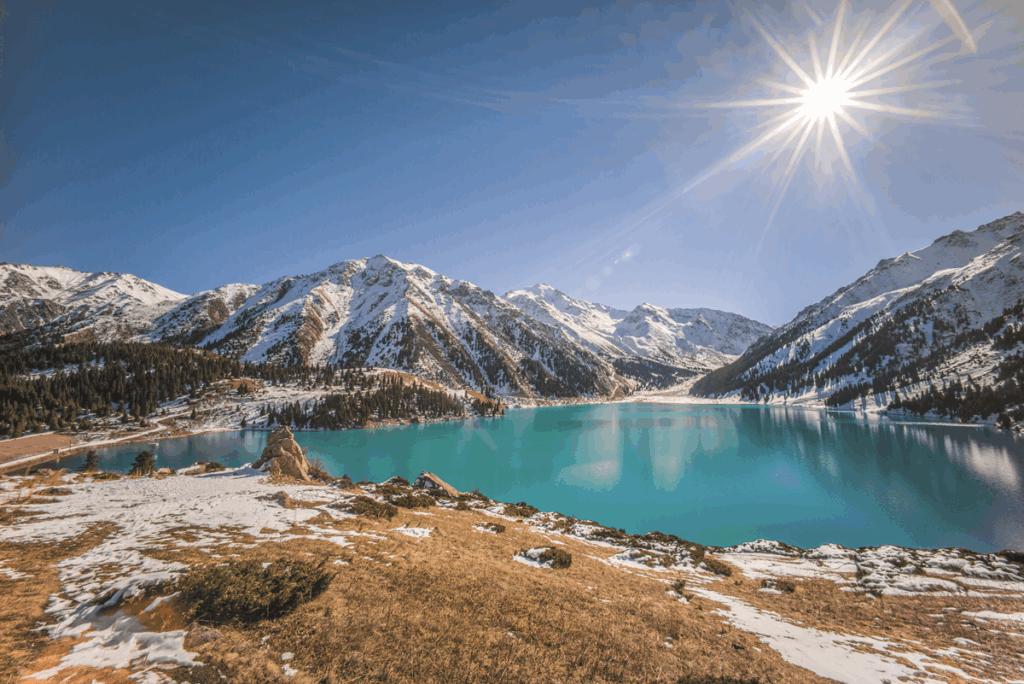
La décadence me coupe presque le souffle alors que notre train continue de parcourir les rails ; sous les cieux les plus bleus au-dessus de la plaine vide, près des eaux de montagne impossiblement vives du grand lac d’Almaty dans les montagnes Tian Shan, devant les murs imposants de carreaux turquoise qui habillent mosquées, médersas et mausolées.
Un théâtre pour seigneurs de guerre et chamanes, pour des empires de steppe et le foyer du Grand Jeu, où la Grande-Bretagne et la Russie se sont affrontées pour l’influence en Asie Centrale, la Route de la Soie est sinueuse, intrigante, parfois frustrante et toujours gratifiante – nous sommes simplement les derniers voyageurs suivant son chemin.
Cette fonctionnalité a été initialement publiée dans le numéro 7 de Dream by Luxury Escapes.