USD
USD  Written by Stephanie Mikkelsen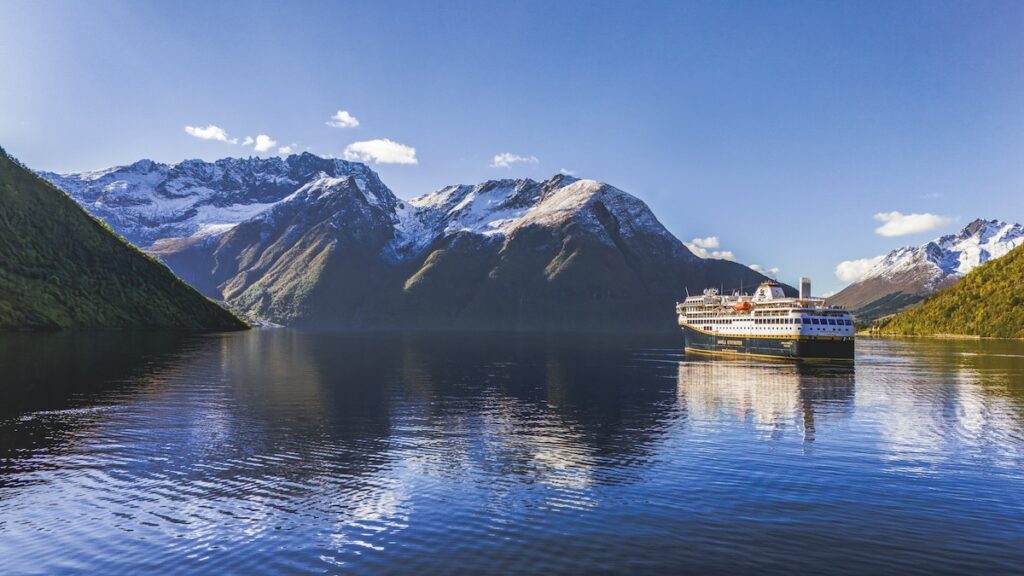
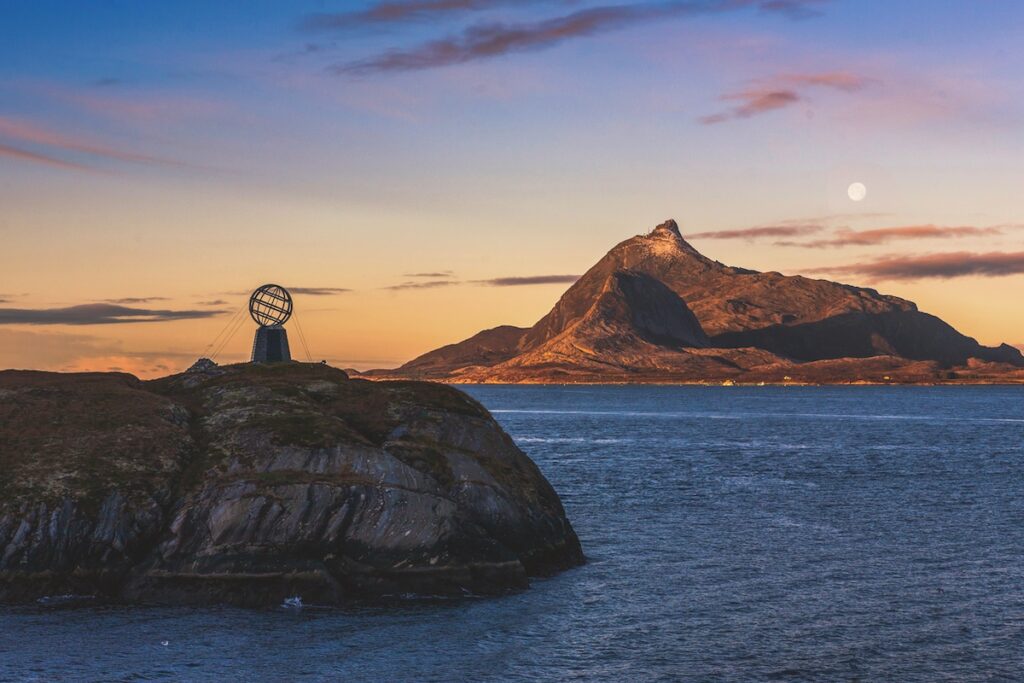
Crossing the imaginary line of the Arctic Circle isn’t like I expected. The night before, I’d heard the PA reminder about a competition for guests to guess the exact time Havila Capella would cross the Circle’s marker. It’s so discreet – more suggestion than announcement – that I forget to submit my entry, a travesty for someone known for their competitive streak. My luck isn’t any better when the time comes: I miss it completely. One hurried dash to my cabin for a jacket and I’m up on deck eight to see the Northern Polar Circle Globe, the crossing’s marker on Vikingen island, in the ship’s wake.
The real ceremony comes in the form of an Arctic baptism that happens right after – equal parts light-hearted fun and Viking ritual. We pay our respects to Njord (or Njörðr), Nordic god of the sea and wind, summoning him with our shouts. “Njord!” we chorus. A bearded figure in full theatrical garb appears on a balcony above and offers his blessing. Then comes the catch: a ladle of icy water, cubes and all, dumped down the shirt backs of anyone willing to brave the shock. I step forward, not wanting to incur Njord’s wrath. The shot glass of something gingery and borderline medicinal I’m passed afterward helps stave off the chill.
Three days earlier, I’d stepped aboard Havila Capella in Bergen, setting out on a seven-day coastal journey to Kirkenes, a far-flung town in northeastern Norway less than 20 kilometres from the Russian border. This is my first real cruise, unless you count Sail Croatia during a gap year. I expect bingo and buffets, perhaps some towel animals. But those assumptions are immediately cast overboard. Inside, it’s all pale timber, soft lights and massive windows. Classic Scandi minimalism, but warm. No chandeliers, no music. Just footsteps, ice cubes clinking and the distant hum of engines. It takes only an hour of cutting laps around the decks to realise Capella isn’t a floating resort; it’s a working vessel with purpose. Part ferry, part mail carrier, part Arctic slow-travel machine.
That evening at Havrand, the ship’s main restaurant, I meet June from Melbourne, and Pascale and Marieke, her friends from Belgium. All three remark on how unusual the calm is – something they hadn’t expected but are already appreciating. “The fact it is a working vessel does not take anything away from the beautiful surrounds, if anything it reminds us of the people living and working here,” June says.
After a smooth first night in my Seaview Superior Double cabin – no-fuss Nordic design, picture window and enough quiet to knock me out – I wake ready. The calm onboard makes it easy to switch off, which comes in handy because the day’s main event demands full attention: Geirangerfjord.
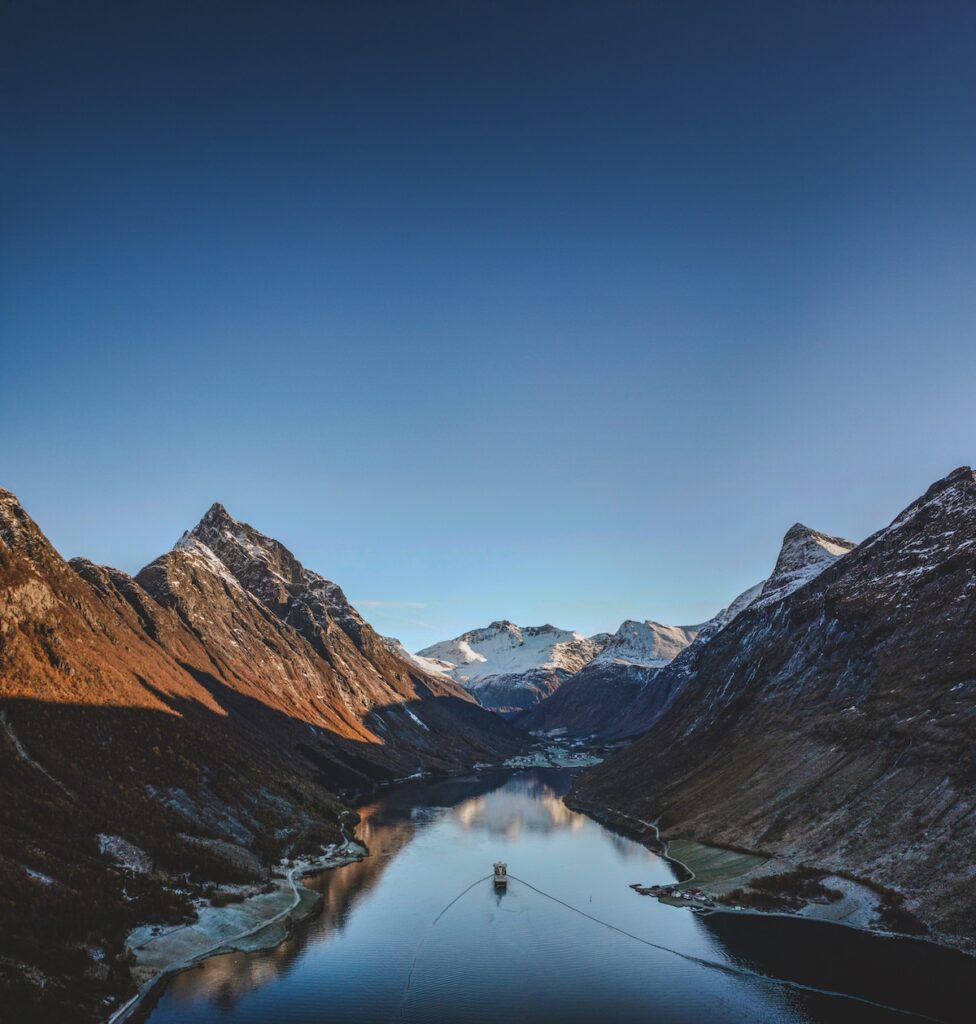
Sheer cliffs rise on either side, streaked with waterfalls that tumble into water the colour of polished jade. Out on the blond timber deck, the air hits like a chilled shot of aquavit, and it’s so peaceful I half expect Loki to pop up just to ruin it. The only sounds are wind buffeting around my ears and the squeak of my rubber soles as I ping-pong between starboard and port, trying not to miss a thing.
Between these moments of natural theatre, Capella maintains its working rhythm. Day and night, it stops at tiny ports – some barely bigger than a single shed. I’m unreasonably pleased when I spot crates labelled “smoked salmon” being loaded aboard – if the rate I’m eating it every morning at breakfast is anything to go by, the ship’s stores could run low. Some stops last more than an hour; others don’t break 20 minutes. I watch some passengers board with groceries and handbags, and others wheel on suitcases and backpacks.

Throughout the week, I see friends and family embrace hello, and watch as others wave goodbye. These moments capture something essential about the journey: there’s no performance, no polish – it’s functional, and that makes it strangely intimate.
I wasn’t alone in noticing the ship’s unusual atmosphere. “The lack of noise is something you forget about,” says Moira Richardson, who I get talking to in one of the many guest lounges. “Up on deck is where I feel it most – just hearing the waves. It’s very peaceful. Sometimes it’s so quiet it’s noisy.”
The fjord huts we pass tell a story of Norwegian travel traditions. Norwegians have long understood the power of unplugged, silent travel – not a new trend, but a way of life hundreds of years old. It’s clear from the scattered farms and hiking huts that this is a country far ahead of the curve when it comes to appreciating stillness and nature without distraction.
Dining rituals and snow hotels
Dining onboard reflects Havila’s thoughtful approach to travel and the environment. Minimising waste is a focus, and the cruise line has set itself the ambitious target of reducing food waste to a mere 75 grams per passenger per day. This mindful approach extends to the entire experience. Lunch is served as small plates, with passengers encouraged to order three – though some days I find myself nudging four or five. Dinner is three-course a la carte. Both menus change every three days, reflecting the stretch of Norway we’re currently sailing by. Throughout the voyage, I never have the same dish twice.

Dining with June, Pascale and Marieke becomes a favourite evening ritual. We share bottles of wine, adventures from the day and an easy rapport with the restaurant crew. The only nights we don’t dine together are when we, separately, book into the ship’s formal restaurant. Hildring takes its name from a rare optical illusion – when light bends in the atmosphere, making ships or islands appear to float above the horizon. In the restaurant of the same name, multi-course dinners hover between fine dining and home comfort. Another phenomenon: it’s the only place where I encounter background music. With only a dozen tables and a single waiter gliding between them, Hildring feels like a private dinner party.
The restaurant offers alternating seafood and meat menus, as well as special king crab or wine-pairing evenings. I opt for the seafood tasting option. King crab from Varanger arrives brightened with Arctic ponzu, followed by cod from Lofoten in a silky crayfish stock. Dessert is the dish I’ve thought about ever since: sea buckthorn cream with cloudberries and a herb crumble. The sea buckthorn hits like passionfruit or pineapple, the cloudberries pop in the mouth like tiny fireworks, and the buttery savoury crumble reins in the sweetness perfectly.
Even our excursions reflect the philosophy of presence over rush. I wake at 5am for breakfast at the North Cape, enjoying having the plateau almost entirely to myself. In Kirkenes, I visit a snow hotel and make friends with huskies. Each outing feels like a natural extension of the voyage’s emphasis on being present.
But the rigid inflatable boat (RIB) safari from Stamsund deliberately shatters the week’s established rhythm. My cheeks go numb, my lips taste like salt, and I half-shriek, half-swear every time another blast of frigid Arctic seawater plasters my hair across my face like seaweed. I cling to the seat in front of me as our RIB skims over the Nordic chop, landing with an abrupt thwack with every swell. We launch from Stamsund, zipped into floatation suits thick enough to survive a dunking, with a quick safety pep talk: don’t fall out. Then comes the ride. At one point I swallow a mouthful of ocean. Minutes later, I’ve forgotten about my numb toes – too busy with laughter. The contrast makes me appreciate how the vessel’s designers understood that real luxury isn’t about noise – it’s about the absence of it.
A quiet place

We sail into Trollfjorden, located in the Lofoten archipelago, under escort of the midnight sun, the sky doing its best impression of afternoon. It could be 3pm for all I know; above the Arctic Circle in summer, the light doesn’t fade – it just changes colour. Now, it’s soft-edged and slightly diffuse – nature’s version of mood lighting.
As we venture further in, towering mountain walls close in around Capella almost like a trapdoor, with rock faces rising near-vertical on both sides. Still water reflects the greens of moss and spindly trees. The fjord itself is barely 100 metres wide at the mouth – surely too narrow for a ship this size – but the captain handles it like he’s parallel parking my hatchback.
It’s standing room only at the bow, as other passengers also put off their bedtime to soak it all in. It’s not just sound that has stopped; it feels like time has, too. The light says day, my watch says 1am, and I’ve given up trying to argue.
When it’s time to say bon voyage to Havila Capella, I disembark in Tromsø feeling oddly calm and maybe a bit wobbly – sea legs or just the after-effects of a week unplugged. Silence isn’t boring; it’s the loudest thing on board. At first it was disconcerting; by the end, I’m hooked.
This feature was originally published in Issue 10 of Dream by Luxury Escapes.